
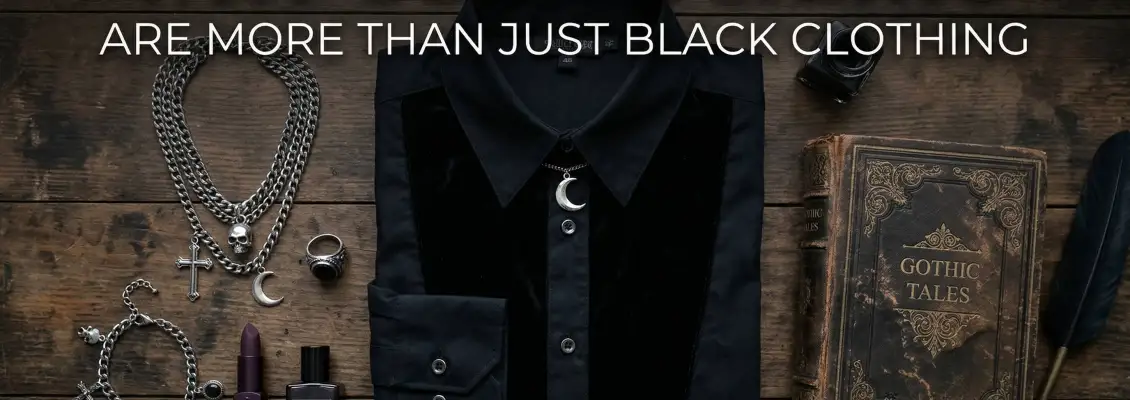
Why Gothic Shirts Are More Than Just Black Clothing
Gothic shirts aren’t simply black tops hanging in a dark wardrobe — they are powerful symbols of identity, rebellion, and artistic expression. Rooted in subculture and rich with historical and musical influence, these garments speak volumes long before the wearer says a word.
Whether paired with structured pants, platform boots, or accessories from a thoughtfully built men gothic wardrobe, these shirts complete a statement of personal identity.
Let’s explore why gothic shirts are far more than just dark fabric — and why they continue to evolve as one of the most expressive pieces in alternative fashion.
1. Gothic Shirts Represent Subculture, Not Just Style
While most people associate goth fashion with black clothing, the truth runs deeper. Gothic shirts are steeped in rich cultural history — inspired by everything from Victorian mourning attire to 1980s post-punk fashion. These garments are not just chosen for aesthetics, but to visually declare independence from mainstream norms. Whether worn in the shadowy corners of underground clubs or the spotlight of a gothic fashion shoot, these shirts communicate that the wearer stands apart.
“When I wear a gothic shirt, it’s not about darkness — it’s about defiance and storytelling,” says Julian Crane, a stylist for Wave-Gotik-Treffen performers.
Gothic fashion has always been about more than black. It’s about expressing your beliefs, emotions, and identity without apology. Gothic shirts, in particular, help codify this narrative — they act as armor and poetry in one, worn by those who’ve chosen the road less traveled.
2. Details Make the Difference: Lace, Mesh, and Hardware
The unique identity of a gothic shirt lies in the details that set it apart from any standard black tee. From ornate lace collars to metal fastenings and exaggerated sleeves, these are garments that celebrate maximalism. Mesh inserts may expose skin while still maintaining mystery; corset-laced panels transform a simple silhouette into a statement of power and sensuality.
These features aren’t just visual gimmicks — they’re deeply symbolic. For instance, studs and chains can evoke themes of control and resistance, while frilled cuffs and romantic ruffles hint at gothic melancholy or historical romanticism. These shirts often tell you something about the wearer before they ever speak.
Modern gothic shirts may also include techwear or cyberpunk elements, adding neon, industrial straps, and functional pockets for a futuristic spin. This detail-heavy construction makes them not just expressive, but timeless in their appeal.
3. Tied to Music, Philosophy & Creative Movements
Gothic fashion is inseparable from music — especially when it comes to shirts. From band tees emblazoned with The Cure or Bauhaus to poet blouses worn by frontmen like Peter Murphy or Nick Cave, the shirt has always been a medium of musical self-expression. It's not just about what you wear — it's about who you listen to and what you believe in.
A 2024 AltStyle Research study found:
78% of gothic fashion wearers cite music as the first influence in their clothing choices — especially band tees, DIY altered shirts, or Victorian-style tops.
These garments are also reflections of gothic philosophy: nihilism, romanticism, and the tension between beauty and decay. From existential lyrics to haunting ballads, gothic shirts often echo these themes through dark motifs, poetic cuts, and expressive fabrics. Wearing one becomes a creative act, where sound meets style.
4. Personalization & DIY Are Part of the Culture
No other fashion movement embraces DIY customization quite like goth. Gothic shirts are often canvases for personal expression — ripped, dyed, stitched, burned, or adorned with handwritten lyrics, occult patches, and symbols of rebellion. What starts as a mass-produced garment can become a one-of-a-kind artifact of personal identity.
“My favorite shirt started off plain — now it’s patched with band logos, layered with mesh, and spray-dyed red. It’s me,” says Nero Vox, an underground musician and stylist.
This do-it-yourself spirit empowers wearers to build their look on their own terms. It also fosters sustainability in gothic fashion, where repurposing and reimagining are favored over constant consumption. Each altered shirt becomes a timeline, an emotional record of the wearer’s journey through phases, scenes, and subcultures.
5. Variety Within the Darkness
Gothic shirts may all fall under the “dark fashion” umbrella, but the variety is immense. From the extravagant elegance of romantic and Victorian styles to the militaristic edge of cyber and industrial, there’s a shirt for every kind of gothic identity. Some styles feature minimalist silhouettes, while others are maximalist with embroidery, hardware, and lace.
You’ll find:
Romantic/Victorian: Flowing cuffs, high collars, and buttoned fronts
Punk-inspired: Tartan panels, patches, or screen-printed lyrics
Cyber goth: Bright graphics, mesh layering, and utility cuts
Minimal goth: Matte black stretch cotton, clean cuts, and tonal embroidery
Each style serves a different subcultural purpose — whether it’s to look ethereal, aggressive, futuristic, or academic. That versatility makes gothic shirts a cornerstone of alt wardrobes for men across scenes.
Final Thoughts: Gothic Shirts Are Storytellers in Stitch
At their core, gothic shirts are not fashion statements — they are life statements. They carry visual, emotional, and cultural weight, often representing who someone is, what they’ve lived through, and what they believe in. These garments are poetic, dramatic, and often politically charged.
They embrace history, celebrate rebellion, and refuse to conform — and that’s why they’re so much more than just black clothing. For anyone building a wardrobe rooted in identity and self-expression, a gothic shirt is the beginning of your narrative.
Related Reads:
The Complete Gothic Shirts Style Guide
How to Style Gothic Shirts for Different Occasions