

Goth Through the Decades: From 80s Trad Goth to Today's Modern Interpretations
The Goth subculture, born from the echoes of post-punk, has proven to be one of the most resilient and visually captivating movements in alternative fashion. It is not a static uniform but a living, breathing aesthetic that has shape-shifted and evolved for over four decades. From the dramatic, theatrical looks of the 1980s to the minimalist, tech-infused styles of today, the core of Goth—a love for the dark, the romantic, and the beautifully melancholic—remains unchanged.
So, how did Goth fashion evolve? It's a journey through music, art, and cultural shifts, with each decade adding a new layer to its rich and complex identity.
This guide will take you through the key eras of Goth fashion. We will explore the iconic looks, the musical influences, and the cultural movements that defined each decade, providing a clear timeline of how the style has adapted while staying true to its shadowed roots.
The 1980s: The Birth of Trad Goth
The 1980s was the genesis. This is where the Goth aesthetic was first forged, emerging directly from the UK's post-punk and early gothic rock scene. This era is often referred to as "Trad Goth" (Traditional Goth) because it established the foundational visual language that all subsequent styles would build upon or react against.
- Fact: The term "gothic" was first applied to music by critics describing bands like Siouxsie and the Banshees and Joy Division. The London nightclub The Batcave, which opened in 1982, is widely considered the cradle of the Goth subculture, providing a dedicated space for the music and fashion to flourish.
The look was dramatic, androgynous, and heavily influenced by a blend of punk's DIY ethos and Victorian mourning aesthetics. It was a direct visual representation of the dark, atmospheric music created by bands like Bauhaus, Siouxsie and the Banshees, and The Cure.
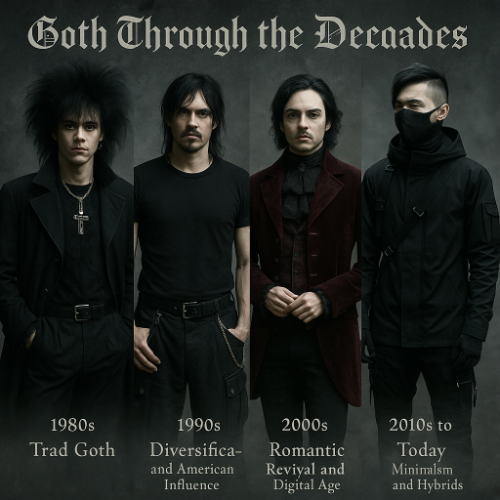
Key Elements of 80s Trad Goth:
- The Hair: Big, black, and backcombed. Teased hair was a non-negotiable staple, creating a wild, imposing silhouette that defied gravity and convention.
- The Makeup: Pale white foundation created a stark, ghostly canvas. This was contrasted with heavy, dark, and often messy black eyeliner for both men and women, along with dark lipstick.
- The Clothing: This was a high-contrast look built on layers.
- Fishnets & Lace: Ripped fishnets were worn as tops, gloves, or traditional hosiery. Delicate lace, often vintage or thrifted, added a touch of romantic, decaying elegance.
- Leather & Denim: Black leather jackets, often customized with band patches or studs, were worn over simple black jeans or trousers.
- Footwear: The look was grounded in heavy, practical boots. Pointed winklepickers and sturdy combat boots were the dominant styles.
- The Accessories: Silver jewelry was essential. Ankhs, crucifixes, and other occult symbols were popular, along with rosaries and layered chains.
This era was about creating a striking, almost monstrous silhouette that was proudly outside of the mainstream. It was a celebration of the strange and the beautiful, setting the stage for everything to come.
The 1990s: Diversification and American Influence
As Goth spread globally, particularly to the United States, the 1990s became a decade of diversification. The monolithic "Trad Goth" look began to splinter into various sub-styles, influenced by new musical genres like industrial, metal, and electronic music. This was also the decade where Goth entered mainstream consciousness through films and pop culture, leading to both growth and new interpretations.
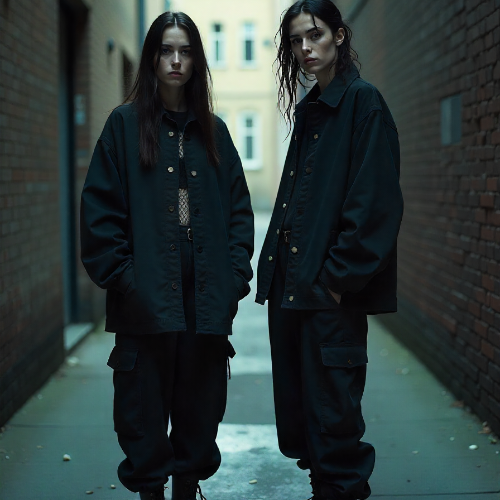
Rise of Industrial and Cyber Goth
The harsh, electronic sounds of industrial music gave rise to a more militant, futuristic aesthetic. The focus shifted from decaying romance to dystopian power.
- Key Look: The clothing became more structured and utilitarian. Black cargo pants, heavy combat boots, and military-inspired jackets became popular. This laid the groundwork for what would later become the Military Goth look. As technology advanced, this style began incorporating neon colors, PVC, and goggles, planting the seeds for the Cyber Goth scene that would explode in the late 90s and early 2000s.
The "Mall Goth" Phenomenon
In the mid-to-late 90s, brands like Hot Topic in the US made Goth fashion accessible to a suburban, mainstream audience. This "Mall Goth" style was a more simplified, commercial version of the look.
- Key Look: This style was defined by band t-shirts (especially Marilyn Manson and Nine Inch Nails), oversized black hoodies, and extremely wide-legged or baggy pants adorned with an abundance of chains, straps, and D-rings. It was less about the nuanced history and more about a bold, easily identifiable alternative statement.
This decade saw Goth transform from a singular subculture into a branching tree of interconnected scenes, each with its own unique visual identity.
The 2000s: The Romantic Revival and Digital Age
The new millennium saw a swing back towards the more romantic and elegant aspects of the culture, alongside the full blossoming of internet-fueled subcultures.
The Return of Romantic and Victorian Goth
There was a renewed interest in the historical and literary roots of Goth. The aesthetic became more polished, elegant, and sophisticated.
- Key Look: This was the era of the modern vampire. Men adopted long frock coats, velvet waistcoats, and ruffled poet shirts. The look was less DIY and more about investing in high-quality, statement pieces that evoked a sense of timeless, aristocratic darkness. For those looking to master this style, exploring a Gentleman's Guide to Victorian Gothic Fashion is the perfect starting point.
The Rise of Digital Subcultures
The internet allowed niche interests to flourish globally. Cyber Goth became a dominant force in club scenes worldwide, with its neon hair falls, goggles, and futuristic attire. At the same time, the Emo subculture exploded into the mainstream, and while culturally distinct, its aesthetic of black skinny jeans, band tees, and emotional vulnerability was often visually grouped with Goth by outsiders.
The 2010s to Today: Minimalism, Hybrids, and a Return to Roots
In the modern era, Goth fashion has become more fragmented and personalized than ever. The rise of social media platforms like Instagram and TikTok has allowed for the rapid evolution and fusion of styles.
The Minimalist & "Health Goth" Movement
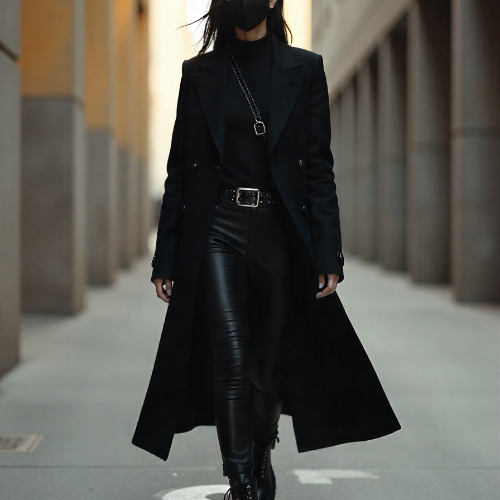
Reacting against the complexity of earlier styles, a minimalist aesthetic emerged.
- Key Look: This style focuses on clean lines, architectural shapes, and a monochromatic palette. It incorporates elements of modern techwear and sportswear, creating a look that is dark, futuristic, and sleek. Think long, asymmetrical black hoodies, tapered trousers, and high-end black sneakers.
The Nostalgic Revival
Today, there is a strong resurgence of interest in the original 80s Trad Goth look. Younger generations are rediscovering the seminal bands and embracing the raw, authentic, and DIY-heavy aesthetic of the subculture's origins. This often involves a mix of vintage finds and modern reproductions of classic pieces like winklepickers and leather biker jackets.
The journey of Goth fashion is a testament to its adaptability. It absorbs influences, reacts to technology, and constantly reinvents itself, all while holding onto the core philosophy that started it all: finding a unique and profound beauty in the shadows.
Inspired to express your own dark aesthetic? You can begin your journey by exploring our curated collection of men's gothic clothing, featuring pieces that honor this rich and evolving history.
Frequently Asked Questions (FAQs)
What is the difference between Goth and Emo?
While both styles often use dark clothing, Goth has its roots in 80s post-punk and a literary, macabre aesthetic. Emo emerged from 80s hardcore punk and is defined by its focus on emotional vulnerability, with a fashion peak in the 2000s characterized by skinny jeans and side-swept hair.
Is Goth still a popular style today?
Yes, absolutely. Goth is a thriving global subculture. While it may not be in the mainstream spotlight, modern interpretations like minimalist "Health Goth" are popular, and there is a strong revival of the original 80s "Trad Goth" look among younger enthusiasts.
Do you have to wear all black to be Goth?
No. While black is the foundational color, many Goth sub-styles incorporate other colors. Victorian Goth often uses deep jewel tones like purple and red, while Cyber Goth is defined by its bright, neon accents. The key is the overall mood and aesthetic, not just the color.
Where did the name "Goth" come from?
The term was originally used in a derogatory way by music critics in the late 70s to describe the "dark" and "baroque" sound of bands like Joy Division. The scene's members eventually reclaimed the label and wore it as a badge of honor.