
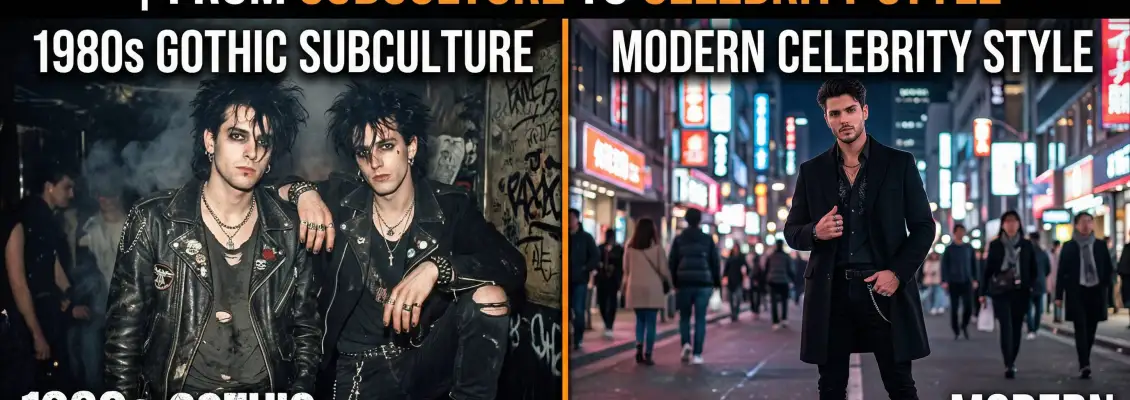
Is Men’s Gothic Fashion Becoming Mainstream? From Subculture to Celebrity Style
Let’s talk about a fascinating paradox. The very fashion designed to set one apart from the crowd—a uniform for the outsider—is now showing up everywhere. From high-fashion runways to your Instagram feed, the distinct DNA of men’s gothic fashion is undeniably influencing what the world wears. It’s a strange, exciting, and complicated moment for a style rooted in rebellion.
So, what does it mean when the mainstream starts adopting the aesthetics of the underground? Is the subculture losing its edge, or is this a testament to its timeless power? For anyone who appreciates the deep-rooted history of authentic men's gothic clothing, the conversation is more relevant than ever.
The Evidence: How the Goth Aesthetic Infiltrated the Mainstream
You don’t have to look far to see the influence. The style has been deconstructed, with its core elements appearing in the most unexpected places.
- High-Fashion's Dark Obsession: For years, designers like Rick Owens have built entire brands on a foundation of monastic, architectural goth. But now, it's broader. Luxury houses are consistently releasing collections featuring oversized black silhouettes, heavy-duty platform boots, and an abundance of leather and hardware. They are selling the mood of goth—brooding, powerful, and romantic—to a global audience.
-
- The Celebrity Uniform of "Serious Artistry": When a male celebrity wants to signal a shift towards a more "serious" or "edgy" persona, what do they wear? They lean into the goth-punk playbook. Think of musicians adopting black leather, intricate silver jewelry, and a more androgynous look. It’s a visual shorthand that communicates depth, non-conformity, and artistic credibility to millions of followers.
-
- The Rise of "Aesthetic Modularity": On platforms like TikTok, the goth subculture has been broken down into a style kit. A user might pair some Tripp-style industrial baggy pants with a totally different top, borrowing one element without adopting the whole identity. This "gothcore" or "dark academia" trend treats the fashion as modular blocks, separated from the music and philosophy that originally gave them meaning.
Why Now? The Cultural Currents Pushing Goth Forward
This isn't a random occurrence. Several cultural forces have aligned to make the gothic aesthetic particularly appealing right now.
- A Craving for Authenticity: In a world saturated with fleeting fast fashion and digital perfection, gothic fashion offers something tangible and real. The emphasis on durable materials like leather, detailed tailoring, and historical silhouettes like a Victorian inspired coat feels permanent and authentic. It's a rebellion against the disposable.
-
- The Expansion of Modern Masculinity: The rigid walls of traditional menswear have been breaking down for years. Goth has always been a haven for this kind of expression, where lace, makeup, and dramatic flair were never confined by gender. As mainstream masculinity becomes more fluid, it naturally gravitates towards a style that has championed androgyny and self-expression for decades.
-
- The Comfort in Acknowledging Darkness: Let's be real: the world is a complex place. The relentless cultural pressure for constant positivity can feel dishonest. Gothic style provides a validating space. It says it's okay to be introspective, to grapple with complex emotions, and to find beauty in melancholy. It's an aesthetic that doesn't demand a fake smile.
Expert View: Separating the Trend from the Tribe
This is the heart of the matter. When a fashion trend borrows from a subculture, what is gained and what is lost? As renowned fashion historian Valerie Steele has documented, the fashion industry has always mined subcultures for inspiration, often absorbing the look while leaving the ideology behind.
The data backs this up. Trend-forecasting reports, like those from The Lyst Index, consistently show massive search increases for "goth-adjacent" items like combat boots or leather trousers. This confirms that people are buying the products, but it doesn't mean they are buying into the culture.
Herein lies the critical difference:
The Trend: Adopting a specific item because it's visually appealing and currently popular.
The Subculture: Curating a look from head to toe—including the specific symbolism of your silver jewelry—as an external reflection of your internal identity, musical tastes, and philosophical leanings.
The Verdict: Evolution, Not Erasure
So, is men's gothic fashion mainstream? Its elements certainly are. The aesthetic has broken containment and is now a permanent part of the global style vocabulary.
But the goth subculture itself remains intact. Its heart still beats in dedicated clubs, in tight-knit online communities, and among individuals who see it not as a trend, but as a home. The mainstream spotlight doesn't diminish the core; if anything, it highlights the enduring power of its ideas.
The darkness was just too compelling to stay underground forever.
Ready to explore a style with depth, history, and meaning? Browse our curated collections of gothic clothing and find the pieces that tell your story.
Frequently Asked Questions (FAQ)
Q1: What is the difference between the Goth trend and the Goth subculture?
A: The Goth trend involves adopting the visual aesthetics of the style, like wearing black or specific items like platform boots. The Goth subculture is a complete lifestyle built around specific genres of music, art, literature, and a shared philosophy that values individualism and finds beauty in darker themes.
Q2: Can I wear gothic clothing without being part of the subculture?
A: Of course. Fashion is for everyone. The key is to wear it with respect for its origins. Start by incorporating pieces you genuinely love into your wardrobe. Great style is about authentic self-expression, not about fitting into a box.
Q3: Is the Goth scene still active?
A: Yes, very much so. While its public visibility has changed since the 80s and 90s, dedicated Goth nights, music festivals, and online communities are thriving worldwide. The scene has proven to be incredibly resilient and adaptable.