
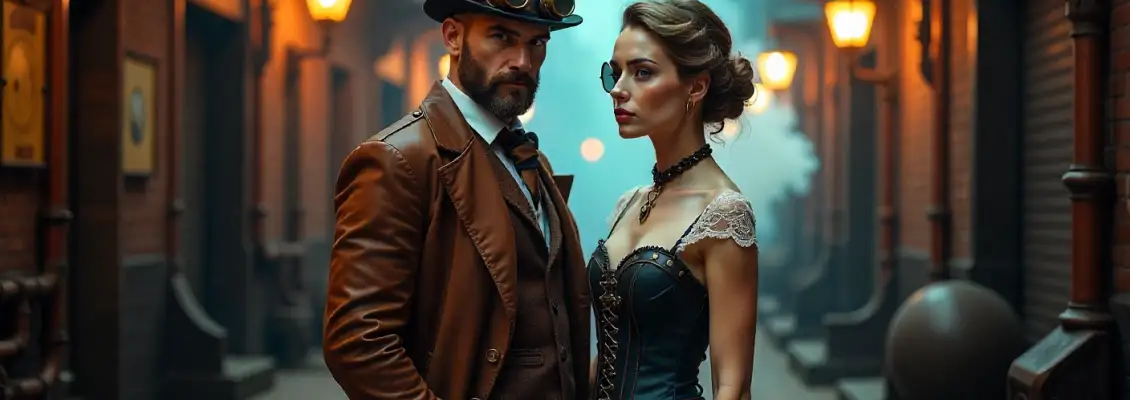
Steampunk Style Explained: A Bold Blend of Past and Future Aesthetics
Imagine a world that never was—a world where steam power, not electricity, reigns supreme. Airships drift silently through gaslit city skies, adventurers clad in leather and brass explore uncharted territories, and inventors tinker with magnificent clockwork creations. This is the world of Steampunk, a subculture and aesthetic that has captivated the imaginations of creators and fashion enthusiasts for decades.
But What Is Steampunk fashion? At its core, it’s a bold and imaginative fusion of two seemingly opposite ideas: the historical elegance of the Victorian era and the speculative fantasy of science fiction. It's a retrofuturistic genre that asks, "What would the future look like if it had happened sooner?"
This guide explains everything you need to know about the Steampunk style. We’ll explore its literary roots, deconstruct its key fashion elements, and offer practical advice for building your own time-traveler’s wardrobe.
What is Steampunk? A Future That Never Was
To understand the fashion, you must first understand the philosophy. Steampunk is a subgenre of science fiction that imagines an alternate history where the 19th-century Industrial Revolution evolved into a hyper-mechanized future.
Literary Roots: The aesthetic is heavily inspired by the works of Victorian-era sci-fi pioneers like Jules Verne (20,000 Leagues Under the Sea) and H.G. Wells (The Time Machine).
The Name: The term "steampunk" was coined in the 1980s by author K.W. Jeter as a tongue-in-cheek way to describe this style of speculative fiction, differentiating it from the futuristic Cyberpunk genre.
The Core Concept: It’s a celebration of anachronistic technology. It blends analog machinery—gears, cogs, steam pistons, and clockwork—with a distinctly Victorian sensibility of craftsmanship, elegance, and exploration.
The Core Elements of Steampunk Fashion
Steampunk fashion is a masterclass in layering, texture, and personalization. It’s not about wearing a pre-made costume; it's about assembling a character. The look is built upon a historical foundation and then customized with futuristic, industrial details.
The Victorian Foundation: Silhouette and Fabrics
The silhouette is the most crucial starting point. The clothing itself is firmly rooted in the 19th century, creating a recognizable historical base.
For a feminine look, this often means:
A well-fitted Steampunk Corset to create that classic hourglass shape.
Layered bustle skirts, high-low gowns, or practical bloomers for an adventurous twist.
Lace-up boots, elegant gloves, and delicate blouses.
For a masculine or androgynous look, the foundation includes:
Tailored Steampunk Vests or waistcoats.
High-collared shirts, pinstriped trousers, or rugged pants.
Long duster coats or formal tailcoats.
The color palette is earthy and rich, dominated by browns, creams, deep burgundies, and forest greens, accented by the metallic sheen of brass, copper, and bronze.
The Industrial Revolution Influence: Gears, Cogs, and Gadgets
This is where the "punk" comes in. Once the Victorian foundation is set, it’s time to layer on the mechanical and industrial elements that signify the "sci-fi" half of the equation. These details suggest a world of invention and hands-on engineering.
These are not just random decorations; they should feel integrated into the outfit, as if they serve a purpose. You'll find these elements on everything from hats to belts to weapon props. Exploring a full collection of Steampunk Accessories is the best way to find the perfect mechanical details for your look.
Iconic Accessories: More Than Just Decoration
Accessories are the heart and soul of any Steampunk outfit. They tell the story of your character—are you an airship pilot, a mad scientist, a noble inventor, or a rugged explorer?
Goggles: The quintessential steampunk accessory. Whether worn over the eyes or perched on a hat, they signify a readiness for adventure—perfect for piloting an airship or protecting your eyes in a laboratory. Our collection of Steampunk Goggles features styles for every persona.
Hats: A top hat, bowler, or leather aviator cap is practically mandatory. These are often customized with goggles, gears, feathers, or clock hands.
Pocket Watches: An elegant nod to the Victorian era, often with visible, intricate gear work.
Leather Goods: Belts with holsters, utility pouches, harnesses, and fingerless gloves add a layer of practical grit.
Building Your First Steampunk Outfit
Creating a Steampunk look can feel intimidating, but it’s a rewarding creative process. Here’s a simple, step-by-step approach:
Define Your Character: Who are you in this alternate world? Answering this question will guide all your choices.
Start with the Foundation: Choose your base garments from a collection of Steampunk Clothing. Don’t worry about perfection; a simple brown skirt and a white blouse, or trousers and a vest, is a great start.
Layer with a Statement Piece: Add one key item that defines the look, like a corset, a duster coat, or a leather harness.
Accessorize Thoughtfully: Pick 2-3 iconic accessories to complete the outfit. A pair of goggles on a top hat is a classic combination that instantly reads as steampunk.
Focus on Color: Stick to a cohesive palette of browns, creams, and metallics to ensure your outfit looks unified and intentional.
Steampunk vs. Cyberpunk vs. Dieselpunk: Understanding the 'Punks'
Steampunk is part of a larger family of "punk" subgenres. Understanding the distinctions is key to mastering the aesthetic.
Steampunk: Victorian era + steam power. Aesthetics are brass, wood, and clockwork.
Dieselpunk: 1920s-1950s era + diesel engine power. Aesthetics are chrome, steel, art deco lines, and a grittier, film-noir feel.
Cyberpunk: Dystopian future + advanced computer technology. Aesthetics are neon lights, cybernetic implants, and a focus on the digital world.
Conclusion: Crafting Your Own Alternate Reality
Steampunk is more than just a fashion trend; it’s a vibrant and creative subculture. It’s about craftsmanship, imagination, and a deep appreciation for both history and fantasy. It proves that the most exciting future is one you build yourself—with a little bit of lace, a lot of leather, and a handful of gears.
Frequently Asked Questions about Steampunk Style
What is the main difference between Steampunk and Victorian fashion?
Victorian fashion is a historical style from the 19th century. Steampunk takes that historical base and adds speculative, science-fiction elements like gears, goggles, and imaginary steam-powered technology.
Can you wear Steampunk style casually?
Absolutely! This is often called "soft steampunk" or "steampunk-inspired." You can incorporate elements like a pocket watch, a leather utility belt, a corset over a modern dress, or a pair of goggles on a simple hat to add a touch of the aesthetic to your everyday wardrobe.
What are the essential Steampunk colors?
The core color palette is earthy and industrial. Think shades of brown, sepia, cream, and dark green, accented with the metallic tones of brass, bronze, and copper.
Do I need to make my own Steampunk accessories?
While the DIY spirit is a huge part of the subculture, you don't have to! There are many talented artisans and brands that create high-quality, pre-made accessories. Starting with a few key purchased pieces is a great way to enter the genre.
Is Steampunk still a popular subculture?
Yes, very. While its mainstream peak may have passed, Steampunk has a dedicated global following. It thrives at conventions (like Comic-Con and specialized Steampunk events), in maker communities, and online, continually evolving as new creators add their own spin to the aesthetic.