
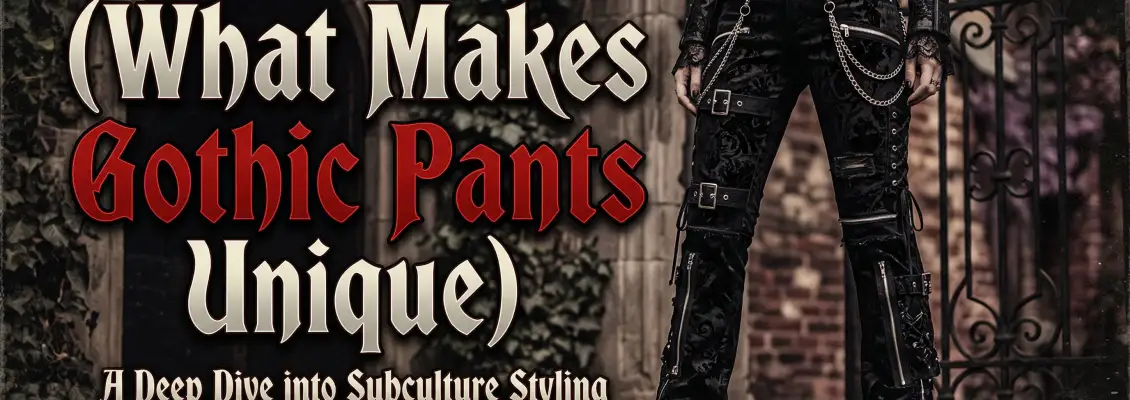
What Makes Gothic Pants Unique? A Deep Dive into Subculture Styling
Gothic pants aren’t just black trousers with flair — they’re a cultural signature, deeply rooted in music, rebellion, and historical references. Whether it's the heavy straps of Tripp pants or the lace-trimmed edges of Victorian styles, gothic pants redefined by more than aesthetics. They carry the DNA of decades of alternative expression.
Let’s dive deep into what sets these iconic garments apart from mainstream menswear.
1. Alternative Aesthetics in Every Stitch
Unlike conventional pants, gothic pants are crafted to amplify personality, not hide it. These garments often feature metal hardware, contrasting textures, and unconventional cuts. From bondage straps and chains to asymmetrical tailoring and corset details, gothic trousers reject minimalism in favor of statement-making design.
“In gothic fashion, pants are never just functional — they’re architectural.”— Derrick Vane, designer at Nyxwear Alternative Apparel

Most gothic pants are made with black or dark-toned fabrics, but the similarities stop there. Details like lace, mesh insets, faux leather patches, and D-rings elevate even casual streetwear. These expressive elements connect the pants to specific subgenres — like punk, romantic goth, or cyber goth — making them both symbolic and aesthetic.
2. Deep Ties to Music, Punk & Counterculture
Gothic pants didn’t originate in fashion runways — they rose from underground music scenes. In the 1980s and ’90s, bands like The Cure, Bauhaus, and Marilyn Manson influenced fans not just with music but with fashion. Tripp NYC pants and bondage trousers became club and concert staples in gothic and punk circles.
A 2024 cultural fashion study by Alt Style Journal reports that over 70% of alternative dressers credit music scenes as their first exposure to gothic pants.
Today, these pants carry forward the rebellious energy of earlier decades. Punk styles still thrive with heavy zippers and tartan panels, while newer iterations adapt to cyber-industrial looks. Even among Gen Z, gothic pants are worn as a symbol of resistance against mainstream fast fashion and sterile minimalism.
3. Historical Influence: From Aristocratic to Apocalyptic
One reason gothic pants remain so visually rich is their embrace of historical and futuristic design elements. Victorian and steampunk styles draw heavily from 19th-century aristocratic fashion, with high-waisted silhouettes, brocade fabrics, and lace-up sides. These evoke elegance, power, and a connection to the romantic past.
Meanwhile, cyber goth pants tap into speculative futures. Often featuring reflective strips, tactical pockets, and synthetic materials like PVC, these pants channel dystopian energy while offering practical movement. It's a unique contrast — one style looks backward, the other forward, yet both remain undeniably gothic.
As someone who’s worked with gothic stylists at events like Wave-Gotik-Treffen, I’ve seen how layering historical references with modern cuts can create unforgettable statements.
4. Construction & Fabric Set Them Apart
Materials matter in gothic fashion. The textures and weight of gothic pants contribute to their drama and movement. Faux leather creates a rigid, structured feel — ideal for punk or biker looks — while velvet and brocade offer rich, tactile surfaces perfect for romantic goth outfits. Cotton twill is common for streetwear, providing flexibility without sacrificing form.
Many designs prioritize structural elements like reinforced seams, stitched paneling, and exaggerated hems. It’s not uncommon to find metal hardware embedded into the construction — including eyelets, clips, and built-in chains.
According to 2025 garment reports by AltTextile Insight, 45% of gothic trousers use a hybrid material blend (cotton-poly-spandex), enhancing comfort while retaining visual weight.
This blend of comfort and drama ensures gothic pants remain wearable in clubs, festivals, or daily life — without losing their edge.
5. Customization & Identity Expression
One of the most empowering aspects of gothic pants is their capacity for customization. Unlike mainstream fast fashion, gothic trousers often invite modification — whether through added patches, embroidery, safety pins, or even DIY distressing.
As a long-time attendee of alternative expos like Dark Fashion Con Berlin, I’ve observed subculture veterans show off heavily customized pants that evolve with their journey — each chain, stain, or rip representing a memory or ideology.
“My Tripp pants have been stitched, burned, and reborn over the years. They’re my timeline, not just my outfit.”— Gideon Vale, visual artist & underground performer
This personal aspect is part of what makes gothic pants irreplaceable. They’re not just clothes — they’re canvases of defiance and identity.
Final Thoughts: Why Gothic Pants Matter
Gothic pants are more than black fabric and metal hardware — they’re cultural artifacts, constantly evolving to reflect the identity of a global subculture. Whether inspired by Victorian history, industrial rebellion, or dystopian futures, they hold space for self-expression, defiance, and creativity.
Their uniqueness lies not only in appearance but in what they stand for. Gothic pants challenge conformity, celebrate individuality, and allow wearers to dress for who they are — not who they’re expected to be.
If you're in the process of curating a wardrobe that reflects a bold, alternative identity, explore our hand-picked collection of dark, subculture-driven menswear. Whether you're drawn to punk, cyber, or Victorian styles, the right pair of gothic pants is just the beginning.
Recommended Reads:
The Complete Guide to Gothic Pants